Monday, March 24, 2014

Tips for Good Vision

The following tips can help you keep your eyes healthy and your vision as clear as possible.
  • Provide good light for reading, work, or study (soft background light plus a light on your task).
  • Take regular breaks from close work and visually demanding tasks. Blink often, and close and rest your eyes when they feel tired or dry.
  • Avoid glare on TV and computer screens. Place your TV or computer screen where lights do not reflect on the screen. Some people find it easier to work on a computer in a dimly lit room. And some people use special nonglare screens that fit over the computer screen.
  • Wear proper eye safety equipment for hazardous tasks.
  • Wear UV-blocking sunglasses to protect your eyes from excessive ultraviolet (UV) light from the sun. Too much UV exposure can damage your retinaClick here to see an illustration. and cause lasting vision loss. It can also raise the risk of cataractsClick here to see more information..
  • Avoid smoke and other things that irritate your eyes.
  • Get routine eye exams from an eye doctor.

Healthy Eating Learn about healthy eating


Most people have heard that healthy eating is important. But it can be hard to know what healthy eating means. Our topics can teach you how to eat well, whether your goal is to feel good, manage your weight, or prevent health problems. You will also find plenty of information about nutrition for health conditions such as diabetes, heart disease, food allergies, digestive problems, and eating disorders.
To learn more, browse our Healthy Eating topics or start with these:

Healthy Eating

How do you get started on healthy eating?

Healthy eating starts with learning new ways to eat, such as adding more fresh fruits, vegetables, and whole grains and cutting back on foods that have a lot of fat, salt, and sugar.
A change to healthier eating also includes learning about balance, variety, and moderation.
  • Aim for balance. Most days, eat from each food group—grains, protein foods, vegetables and fruits, and dairy. Listen to your body. Eat when you're hungry. Stop when you feel satisfied.
  • Look for variety. Be adventurous. Choose different foods in each food group. For example, don't reach for an apple every time you choose a fruit. Eating a variety of foods each day will help you get all the nutrients you need.
  • Practice moderation. Don't have too much or too little of one thing. All foods, if eaten in moderation, can be part of healthy eating. Even sweets can be okay.

Why pay attention to what you eat?

Healthy eating will help you get the right balance of vitaminsClick here to see more information., mineralsClick here to see more information., and other nutrientsClick here to see more information.. It will help you feel your best and have plenty of energy. It can help you handle stress better.
Healthy eating is one of the best things you can do to prevent and control many health problems, such as:
  • Heart disease.
  • High blood pressure.
  • Type 2 diabetes.
  • Some types of cancer.

Is healthy eating the same as going on a diet?

Healthy eating is not a diet. It means making changes you can live with and enjoy for the rest of your life.
Diets are temporary. Because you give up so much when you diet, you may be hungry and think about food all the time. And after you stop dieting, you also may overeat to make up for what you missed.
Eating a healthy, balanced variety of foods is far more satisfying. And if you match that with more physical activity, you are more likely to get to a healthy weight—and stay there—than if you diet.

How do you make healthy eating a habit?

First, think about your reasons for healthier eating. Do you want to improve your health? Do you want to feel better? Are you trying to set an example for your kids?
Next, think about some small changes you can make. Pick ones you can keep doing.
  • Don't try to change everything at once.
  • Set an easy goal you can reach, like having a salad and a piece of fruit each day.
  • Make a long-term goal too, such as having one vegetarian dinner a week.
  • What is a healthy weight?

    A healthy weight is a weight that lowers your risk for health problems. For most people, body mass index (BMI)Click here to see more information. and waist size are good ways to tell if they are at a healthy weight.
    But reaching a healthy weight isn't just about reaching a certain number on the scale or a certain BMI. Having healthy eating and exercise habits is even more important. When you're active and eating well, your body will settle into a weight that is healthy for you.
    If you want to get to a healthy weight and stay there, healthy lifestyle changes will work better than dieting. Reaching a certain number on the scale is not as important as having a healthy lifestyle.

    Why pay attention to your weight?

    Staying at a healthy weight is one of the best things you can do for your health. It can help prevent serious health problems, including:
  • Heart disease.
  • Stroke.
  • High blood pressure.
  • Type 2 diabetes.
  • Sleep apnea.
But weight is only one part of your health. Even if you carry some extra weight, eating healthy foods and being more active can help you feel better, have more energy, and lower your risk for disease.

Why isn't dieting a good idea?

In today's society, there is a lot of pressure to be thin. But being thin has very little to do with good health. Many of us long to be thin, even though we're already at a healthy weight. So we get desperate, and we turn to diets for help.
  • Diets don't work.
    • Diets are temporary. When you diet, you're usually not eating the way you will need to eat over the long term. So when you quit dieting, the extra weight comes back.
    • Dieting usually means not letting yourself have many of the foods you love to eat. So when you quit dieting, you return to eating those foods as much as you used to—or more. And the extra weight comes back.
    • Dieting often means eating so little food that you're hungry all the time and don't have enough energy. So when you quit dieting, you return to eating as much as you did before—or more. And the extra weight comes back.
    • Most diet programs don't include an increase in activity, which is vital to staying at a healthy weight. So when you quit dieting, the weight comes back.
  • Dieting can actually be bad for you.
    • After they quit dieting, most people regain the weight they lost—and many gain even more. Repeatedly losing and gaining weight may be harder on the body than just being overweight.
    • Many diets do not include the right balance of foods to keep you healthy.
    • Dieting leads to eating disorders in some people.
    • Some people feel so defeated after repeatedly failing to lose weight and keep it off that they give up altogether on healthy eating and being active.

Since dieting doesn't work, what can you do?

If you decide that you do need to make some changes, here are the three steps to reaching a healthy weight:
  1. Improve your eating habits. Do it slowly. You may be tempted to do a diet overhaul and change everything about the way you eat. But you will be more successful at staying with the changes you make if you pick just one eating habit at a time to work on.
    To find out how to improve your eating habits, see Healthy Eating.
  2. Get moving: Try to make physical activity a regular part of your day, just like brushing your teeth.
    To learn how to be more active, see Healthy Activity.
  3. Change your thinking. Our thoughts have a lot to do with how we feel and what we do. If you can stop your brain from telling you discouraging things and have it start encouraging you instead, you may be surprised at how much healthier you'll be—in mind and body.
    To find out how to change your thinking, see Getting to a Healthy Weight: Lifestyle Changes.

  •  

Thursday, February 6, 2014

13 Reasons Tea Is Good for You


13 Reasons Tea Is Good for You

Tea or coffee? Consider these health benefits of tea and the next time you have to choose, you may skip the joe
Put down those saucer cups and get chugging — tea is officially awesome for your health. But before loading up on Red Zinger, make sure that your “tea” is actually tea. Real tea is derived from a particular plant (Camellia sinensis) and includes only four varieties: green, black, white, and oolong. Anything else (like herbal “tea”) is an infusion of a different plant and isn’t technically tea.
But what real tea lacks in variety, it makes up for with some serious health benefits. Researchers attribute tea’s health properties to polyphenols (a type of antioxidant) and phytochemicals. Though most studies have focused on the better-known green and black teas, white and oolong also bring benefits to the table. Read on to find out why coffee’s little cousin rocks your health.
  1. Tea can boost exercise endurance. Scientists have found that the catechins (antioxidants) in green tea extract increase the body’s ability to burn fat as fuel, which accounts for improved muscle endurance.
  2. Drinking tea could help reduce the risk of heart attack. Tea might also help protect against cardiovascular and degenerative diseases.
  3. The antioxidants in tea might help protect against a boatload of cancers, including breast, colon, colorectal, skin, lung, esophagus, stomach, small intestine, pancreas, liver, ovarian, prostate and oral cancers. But don’t rely solely on tea to keep a healthy body — tea is not a miracle cure, after all. While more studies than not suggest that tea has cancer-fighting benefits, the current research is mixed.
  4. Tea helps fight free radicals. Tea is high in oxygen radical absorbance capacity (“ORAC” to its friends), which is a fancy way of saying that it helps destroy free radicals (which can damage DNA) in the body. While our bodies are designed to fight free radicals on their own, they’re not 100 percent effective — and since damage from these radical oxygen ninjas has been linked to cancer, heart disease and neurological degeneration, we’ll take all the help we can get.
  5. Tea is hydrating to the body (even despite the caffeine!).
  6. Drinking tea is linked with a lower risk of Parkinson’s disease. When considered with other factors like smoking, physical activity, age and body mass index, regular tea drinking was associated with a lowered risk of Parkinson’s disease in both men and women.
  7. Tea might provide protection from ultraviolet rays. We know it’s important to limit exposure to UV rays, and we all know what it’s like to feel the burn. The good news is that green tea may act as a back-up sunscreen.
  8. Tea could keep waist circumference in check. In one study, participants who regularly consumed hot tea had lower waist circumference and lower BMI than non-consuming participants. Scientists speculate that regular tea drinking lowers the risk of metabolic syndrome (which increases the risk of diabetes, artery disease and stroke), although it’s important to remember that correlation does not equal causation.
  9. Regular tea drinking might also counteract some of the negative effects of smoking and might even lessen the risk of lung cancer (good news, obviously, but not a justification for cigs).
  10. Tea could be beneficial to people with Type 2 diabetes. Studies suggest that compounds in green tea could help diabetics better process sugars.
  11. Tea can help the body recover from radiation. One study found that tea helped protect against cellular degeneration upon exposure to radiation, while another found that tea can help skin bounce back postexposure.
  12. Green tea has been found to improve bone mineral density and strength.
  13. Tea might be an effective agent in the prevention and treatment of neurological diseases, especially degenerative diseases (think Alzheimer’s). While many factors influence brain health, polyphenols in green tea may help maintain the parts of the brain that regulate learning and memory.

How to Help Someone Having a Heart Attack


How to Help Someone Having a Heart Attack

Heart attack is regarded as one of the leading causes of death in humans. A heart attack can be lethal and warrants immediate medical attention. You can significantly increase the odds of survival of a person having a cardiac arrest, if you know what steps to take. Read on to find out more.
1. Call for Ambulance
If you find someone is having a heart attack, your first step should be to call an ambulance. A heart attack can only be treated by trained medical professionals and you must get the patient into the emergency room as soon as possible.
2. Identify Early
Symptoms of heart attack start surfacing a few hours before the actual attack, which may include cold sweat, fatigue, shortness of breath, intermittent pain in the chest and numbness or pain in the left arm. Identifying these symptoms early can help immensely in treating a heart attack.
3. Deliver First Aid
Have the person rest in a comfortable position and ensure that the respiration or blood flow is not constrained by any tight-fitting clothes. The most important thing is to maintain your calm and help the patient to maintain his or her calm. The next step should be to check whether the person is conscious and is properly breathing or not.
4. CPR
If the person has lost consciousness and is not breathing, it is advisable to administer CPR or cardiopulmonary resuscitation. CPR is a combination of rescue breathing and chest compressions. Place your palm right between the nipples and the other hand on top of the first hand. Position your body weight above your hands and give about 30 compressions. Each compression should press down a few inches into the chest and should be given in a rapid motion.
5. Resuscitate Breathing
Resuscitate breathing or mouth-to-mouth breathing should be delivered after the compressions. Tilt up the chin of the patient, then close their nostrils with your fingers and cover the mouth of the patient with yours. Blow a deep breath into the lungs of the patient so that the chest should rise.
Foods for a Healthy Heart
Apples: An apple a day keeps the doctor away: a very clichéd saying but very true. Phytochemicals, present in apples, act as an anti-inflammatory and also prevent the blood from clotting. It is also high on fibres and vitamins. An apple also makes the perfect snack for someone who is always on the go. Plus it is available in different varieties, so you might not get bored of it soon. Add a few chopped pieces of apple in your Greek salad making it healthier.
6. Administer medication
There are drugs such as aspirin or nitro-glycerine that can help to save the life of a patient having a cardiac arrest. You will need to seek medical counsel for administering nitro-glycerine; however, you can give the patient aspirin if he/she has not lost his consciousness.
7. Emergency Aids
Oxygen support or AED (automated external defibrillators) can also help greatly to increase the odds of survival for a heart attack patient.
Until medical assistance arrives, it is very important that you maintain your calm and keep following the requisite steps. The main aim is to prevent the patient’s condition from worsening until help arrives.

Wednesday, November 27, 2013

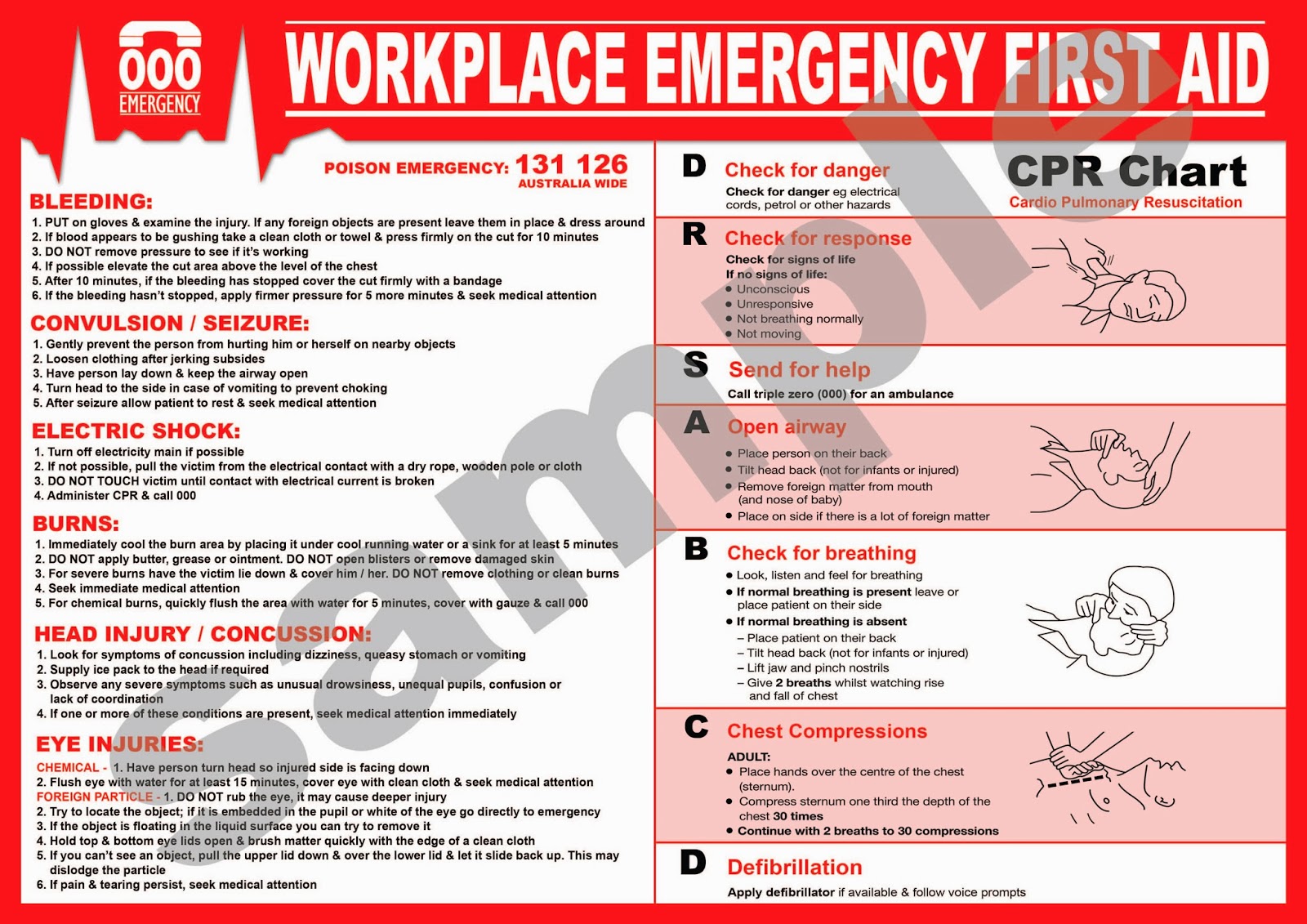
Workplace Emergency First AID


HEALTHY JUICE with Importance


HEALTHY JUICE with Importance
 Neem juice: A liver stimulant that also purifies blood. Good for Diabetes, Chronic fever, cough, Dysentery and Skin diseases.
 Karela juice: A natural Pancreas stimulant: good for Diabetes, Indigestions, and Chronic fever.
 Tulasi & Pudina juice:Good for heart, cold, cough, Asthma, and controls Cholesterol; purifies blood.
 Ginger & Lime juice: Good for digestion, Gas troubles, cold, cough, and throat infections.
 Amla juice: Rich in vitamin C; useful for eye, Hair & Heart, good appetite, acidity, and Petic Osteo Arthritic Gynaecologicalproblem. Helps in stopping white hair growth and rejuvenation therapy.
 Kokam juice (Garcinia indica): Good for skin diseases, reduces acidity and useful in absorbing summer heat.
 Jamun juice (Black berry): Good digestive drink: specially good for diabetics; controls burning sensations, boils, and skin problems.
 Carrot juice: Rich with vitamin A and nutrition for health and eyesight.
 Belpatra juice (Aegle Marmelos): Good for Diabetes, stone problem, and Joint pains.
 Beet Root juice: Helps increasing Hemoglobin and purifies blood. Good for weakness and eyesight.
 Wheat Grass juice: Good for Blood Pressure (High & Low), acidity, Asthma, Piles, and Anemia etc.

Medicinal Uses of Holy Basil


Medicinal Uses of Holy Basil
• Wash and clean two sprigs of basil and add them in a cup of boiling water. Let it steep for about 5 minutes. Finally, strain the mixture and drink the tea to stay healthy and reduce mental tension. You can also add lemon juice in it to make it more refreshing.

• Prepare a mixture by crushing 5-10 basil leaves, ten black peppers and a teaspoon of honey. Take this natural remedy three times in a day to get rid of Headache.
• Chewing a few leaves of Holy Basil is highly beneficial for controlling issues like mouth sores, ulcers and other such infections.
• Take some basil juice and mix one teaspoon each of honey, ginger and juice extracted from betel leaves. Intake of this home remedy is useful in relieving cough and cold.
• Add some water in a tablespoon of basil leaves, enough to form a paste. Apply this paste around navel and abdominal area as an effective therapy to heal Colic.
• To prevent inflammation due to insect bites, apply crushed basil leaves on the affected area.
• Use basil juice as ear drops to eliminate infection in ears.
• Boil two cups of water mixed with a teaspoon of cardamom powder and a tablespoon of Holy Basil leaves. Add some milk and a little bit of sugar in a cup of this decoction. Drink this herbal medicine about two to three times in a day to cure fever.
• Soak about 10-15 basil leaves in a cup of water and have this solution daily in the morning to remove prevent and cure body odor.
• Consuming a combination of one teaspoon of honey and basil juice extracted from 10-15 basil leaves is useful in curing common skin diseases and avoiding intestinal worms. It also helps in strengthening kidneys.
• Crush a bunch of basil leaves and apply the paste on Ringworm to heal it.

• Prepare a decoction by boiling water mixed with 10-15 basil leaves. Drinking this decoction can help a great deal in relieving digestive disorders, particularly Stomach Flu and diarrhea.
Children can be given a quarter teaspoon of basil seed paste along with a cup of milk to cure stomach troubles. Basil decoction mixed with a pinch of rock salt provides relief from stomach ache and gastroenteritis.
• Regular intake of Holy Basil or Tulsi helps reduce cholesterol levels, blood glucose levels, protects against cataracts, promotes healthy metabolism and respiratory health. It is also helpful in coping with anxiety, depression and autoimmune diseases.
Benefits of basil also include its effectiveness as mosquito repellent home remedy because the strong smell of this herb helps drive away mosquitoes.
Moreover, the plant’s stem is used for preparing strings of beads used in meditation. Because of this unique flavor and aroma, Holy Basil is widely used for flavoring foods. Thai basil is a variety of Holy Basil with anise-like taste. It is popularly used in Thai cuisine.